
February 2026 | Textile Recycling Blog

Eslando vs Alibaba

Which Platform Is Better for Textile Waste Feedstock Trading?

Eslando vs Alibaba comparison for textile waste marketplace and recycling supply chains

If you’ve ever tried sourcing textile waste online, you’ll know the feeling.

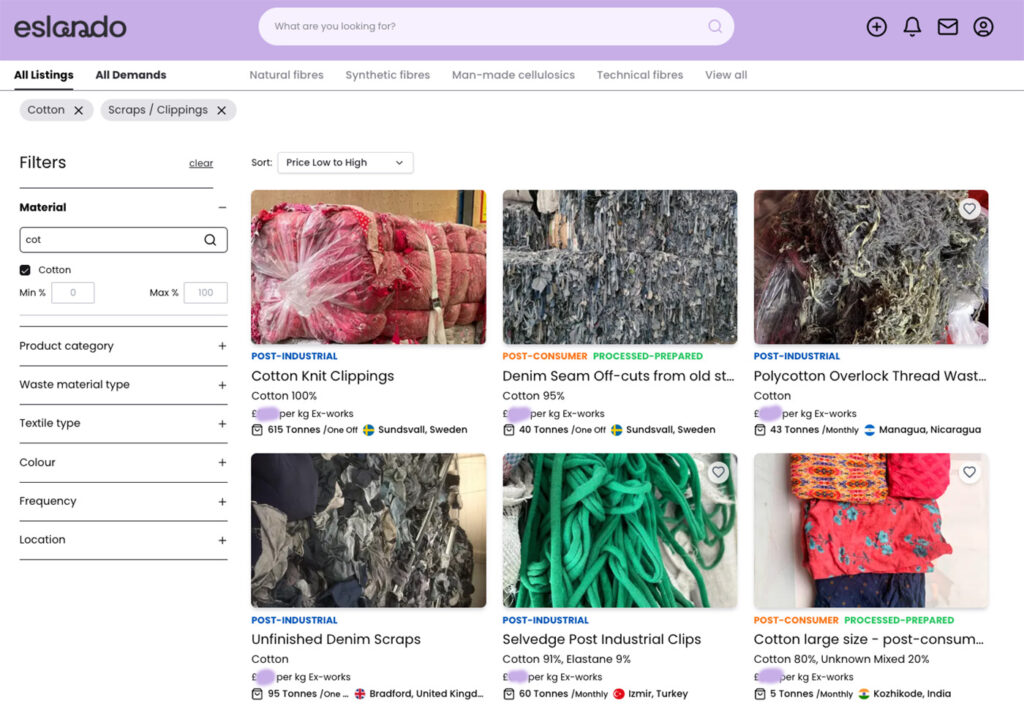
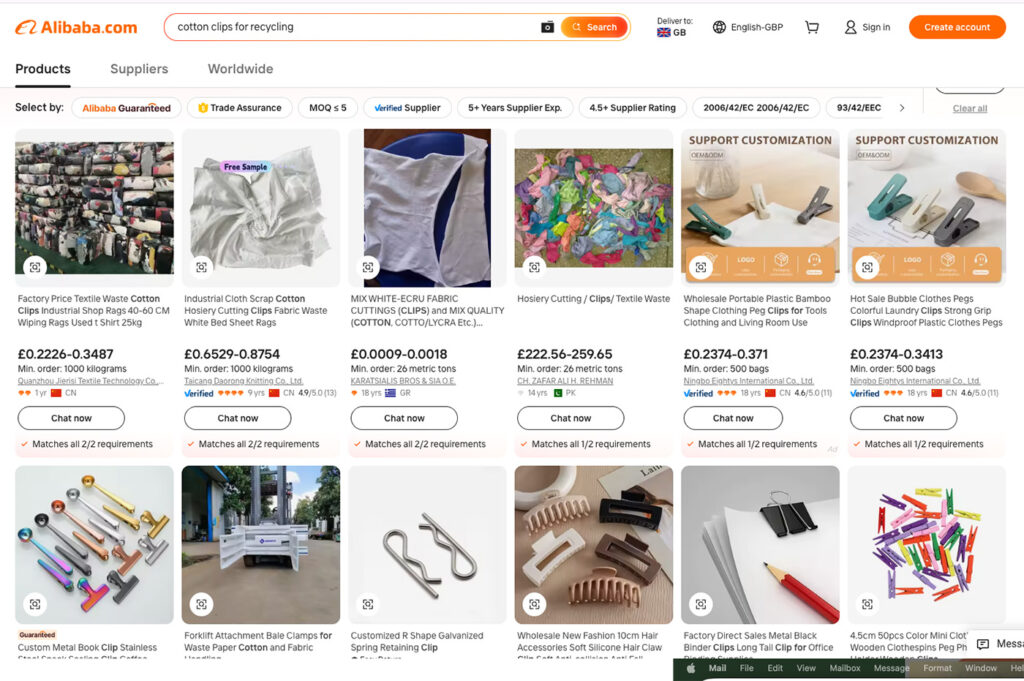
You type “cotton clips for recycling” into a search bar, expecting industrial feedstock. Instead, you’re shown hair clips. Laundry pegs. Office binder clips. Maybe a random factory selling something vaguely textile-related.

You scroll. You refine. You scroll again.

Somewhere in between plastic pegs and fashion accessories, you might eventually find textile scrap.

That’s not because the material doesn’t exist. It’s because the platform wasn’t built for it.

This is where the difference between a general B2B marketplace and a textile-specific one becomes very clear.

Textile recycling is not general trade. It is a specialised supply chain with material science, contamination thresholds, and fibre compatibility at its core.

1. Platform Focus: General Trade vs Textile-Specific

🟣 Eslando

Eslando is built exclusively for textile waste and recycling.

You can filter by:

  • Material type (cotton, polyester, wool, nylon, blends)
  • Textile type (woven, knits, non-woven, etc)
  • Product type (scraps, clipping, fibre, yarns, clothing, non-clothing, pellets etc)
  • Post-industrial – Post-Consumer – Pre-consumer
  • Processed vs unprocessed
  • Monthly tonnage
  • Location
  • Price

You’re not searching a warehouse of random products.

You’re inside a structured recycling ecosystem.

And yes — if you’re looking for cotton clips for recycling, you’ll actually find cotton clips… not women’s hair clips.

Eslando textile waste marketplace search results for cotton clips

🟠 Alibaba

Alibaba is one of the largest B2B marketplaces in the world. It’s powerful, global and built for scale. You can source almost anything:

  • Electronics
  • Machinery
  • Hair accessories
  • Packaging
  • Plastic pegs
  • And yes, Scrap textiles

But textile waste is just one small category inside a massive global trading platform.

There’s:

  • No fibre-specific filtering
  • No clear distinction between post-consumer and post-industrial
  • No segregation by recyclability
  • No structured material grading

You are searching inside a very large universe.

Alibaba search results for cotton clips showing unrelated products in a general B2B marketplace

2. Buyer Experience

🟣 On Eslando:

  • Every listing is structured for recyclers
  • Fibre breakdown is visible
  • Waste type is clearly defined
  • Tonnage per month is listed
  • Location is visible upfront

It’s built for industrial sourcing decisions — not product retail.

🟠 On Alibaba:

  • Listings vary wildly in quality
  • Many are generic stock photos
  • Composition details are unclear
  • MOQ requirements can be high
  • Textile scrap listings sit next to unrelated products

You message suppliers directly and negotiate manually.
There’s no recycling-specific verification or feedstock logic built in.

2. Pricing & Fees: Predictable vs Layered

Textile trading is already margin-sensitive. Platform costs shouldn’t be confusing.

Here’s how the models differ:

Feature

🟣 Eslando

🟠 Alibaba

Access Model

Flat subscription

Tiered supplier membership

Yearly Cost

£79/month ($107/month)

See our latest pricing here in your currency

Typically, annual packages are $2,000 – $5,000+ / year.

Higher-tier verified supplier packages in certain regions can exceed $10,000 per year.

Commission on Trade

None

May apply depending on the service used

Advertising Fees

None required.

Paid ads are often needed for visibility

Ranking / Visibility

All members are visible within structured categories

Higher tiers and paid ads influence ranking

RFQ Access (Buyer Leads)

Unlimited access to listings and connections

Often limited (e.g., capped number of RFQs per day/month depending on plan)

Textile-Specific Filtering

Yes

No – general product marketplace

Access for Buyers

Free for Buyers

Free to browse, but suppliers pay for exposure

For textile waste traders operating on thin margins per tonne, predictable fixed costs can materially impact profitability.

2. Pricing & Fees: Predictable vs Layered

Textile trading is already margin-sensitive. Platform costs shouldn’t be confusing.

Here’s how the models differ:

a. Access Model

🟣 Eslando

Flat subscription

🟠 Alibaba

Tiered supplier membership

b. Yearly Cost

🟣 Eslando

£79/month ($107/month)
See our latest pricing in your currency here

🟠 Alibaba

Typically annual packages are $2,000–$5,000+ per year.
Higher-tier verified supplier packages in certain regions can exceed $10,000 per year.

c. Commission on Trade

🟣 Eslando

None

🟠 Alibaba

May apply depending on the service used

d. Advertising Fees

🟣 Eslando

None required

🟠 Alibaba

Paid ads are often needed for visibility

e. Ranking / Visibility

🟣 Eslando

All members are visible within structured textile categories

🟠 Alibaba

Higher tiers and paid ads influence ranking

f. RFQ Access (Buyer Leads)

🟣 Eslando

Unlimited access to listings and connections

🟠 Alibaba

Often limited (e.g., capped number of RFQs per day/month depending on plan)

g. Textile-Specific Filtering

🟣 Eslando

Yes

🟠 Alibaba

No – general product marketplace

h. Access for Buyers

🟣 Eslando

Free for buyers

🟠 Alibaba

Free to browse, but suppliers pay for exposure

For textile waste traders operating on thin margins per tonne, predictable fixed costs can materially impact profitability.

4. The Key Difference

Eslando is simple.
£79 per month for sellers.
Free for buyers.
Full access. No commissions. No advertising spend required.

You know your cost upfront.

On large general marketplaces, the base membership is only part of the story. Suppliers often invest in higher visibility tiers, keyword ads, or promotional tools to compete. Even then, exposure is influenced by advertising budget and algorithm ranking.

And access to buyer RFQs can still be capped depending on your membership level.

For textile waste traders operating on tight margins, layered costs can quickly add complexity.

Eslando’s approach is designed to remove that uncertainty — and focus on trade, not ad spend.

5. Quality of Leads

On a general marketplace like Alibaba, IndiaMart:

  • You may receive high volumes of inquiries.
  • Many may not understand textile recycling.
  • Some buyers may not know fibre grading or recycling constraints.

On Eslando:

  • The audience is textile recycling-specific.
  • Buyers are recyclers, traders, and processors.
  • The conversation starts at the right technical level.

It’s not about more leads. It’s about the right leads.

In recycling, technical alignment matters more than volume. 

6. Built for Recycling Infrastructure

🟠 Alibaba is excellent for:

  • Mass-manufactured products
  • Global export of goods
  • Large-scale factory trade

But textile recycling isn’t simple product trading.

It involves:

  • Composition complexity
  • Contamination risks
  • Fibre compatibility
  • Blended materials
  • Feedstock standardisation

🟣 Eslando is building infrastructure around this complexity — not just a listings board.

7. So, Which One Should You Use?

If you are sourcing finished products or manufacturing goods at scale, Alibaba is an incredibly powerful platform.

If you are trading textile waste, sourcing fibre-to-fibre feedstock, or building recycling supply chains, a specialised platform makes a difference.

Your marketplace shouldn’t add more noise.

And if you’re looking for cotton clips for recycling — you’ll find cotton clips on Eslando, not women’s hair clips.

8. Final Thought

Textile recycling is complex enough.

Your sourcing platform shouldn’t make it harder.

If you’re serious about scaling you circular textile supply chains — use a marketplace built for textile waste like eslando.

👉 Explore Eslando Marketplace
👉 Start your 7-day free trial

And next time you search for cotton clips for recycling, you won’t need to scroll past hair accessories.

Still have questions, get in touch with us via Whatsapp via the chat widget on the corner of your screen. Or write to us on info@eslando.com

See what eslando can do you for you in the short video below

Scroll to Top